
Leh: The inaugural Sham Festival came to a colorful close after two days of immersive cultural experiences that brought together local communities, visitors, and tourists in the heart of Ladakh’s Sham region. Set against the breathtaking backdrop of the villages of Tia and Tingmosgang, the festival showcased the region’s deep spiritual roots and vibrant heritage.
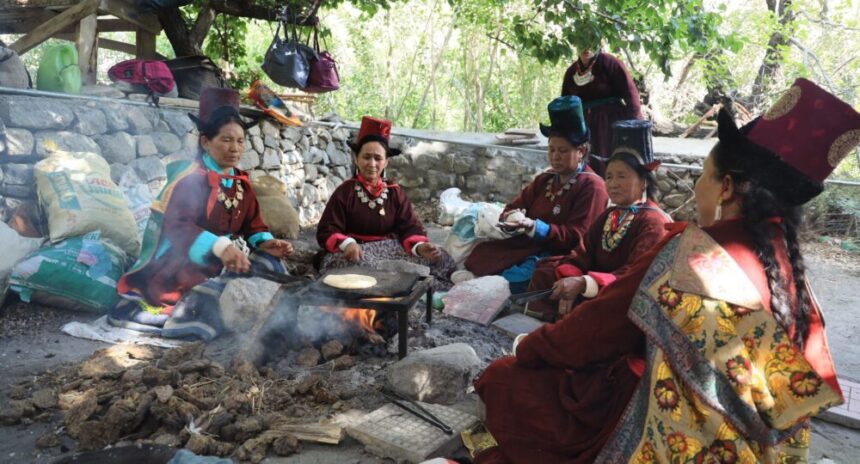
Day 2 began with a peaceful prayer session and meditation at the awe-inspiring 97-foot statue of Jambeyang (Manjushree) in Tia — the tallest of its kind. From there, visitors embarked on the Tongtum Heritage Walk, winding through ancient Ladakhi homes where stories were passed down through generations. Stops at homes like Shingkan, Kachepa, and Changri offered a rare glimpse into traditional life, complete with ancestral interiors and authentic local dishes prepared in age-old kitchens.
In the heart of the village, the gathering at Morzing brought together villagers and guests in a celebration of music, stories, and traditions. The heritage walk concluded at the archery ground with demonstrations of traditional sport — a fitting tribute to Ladakh’s living customs.
The second half of the day unfolded in Tingmosgang, where visitors explored ancient sites including a historic well and wall near the palace. A guided tour of Tingmosgang Palace introduced participants to the legacy of the Tingmosgang Treaty, while at Tseskarmo Monastery, locals reenacted the Ladakhi New Year, Losar, breathing life into ancient customs.
The festivities also featured traditional dances such as the Skin Dance, Karokpa, and Horse Dance, surrounded by stalls offering handicrafts, handlooms, and traditional cuisine — a vibrant marketplace that reflected the community’s creativity and pride.
Executive Councillor Ghulam Mehdi, who attended as chief guest, praised the community-driven efforts behind the festival, noting its role in reviving Ladakh’s cultural vibrancy and fostering intergenerational connections. Councillor Tashi Tundup emphasized the need to preserve the Sham region as a heritage destination, while Tingmosgang’s Nambardar, Tsewang Dorjey, called on tour operators to spotlight the region’s unique legacy and urged greater administrative support to bring Sham’s story to a wider audience.
The Sham Festival’s success highlights the growing importance of cultural and rural tourism in Ladakh — a model where communities lead the way, and heritage becomes a shared experience.